Author Archives: Eva Rieder

About Eva Rieder

Unknown's avatar
Eva Rieder is a speculative and contemporary/mainstream fiction author. By day, she masquerades as a high school Math and English teacher. Though she adores teaching and her students very much, when Eva returns home she reglues her fingertips to the keyboard to pursue her alter ego’s destiny. She currently lives and writes in Northern California with her two keyboard-savvy cats.

OUAT Flash Fiction Entry Possibility #3…Vote is Tomorrow!

Happy Wednesday, everyone! Today is the third of a four-day blog series to determine which flash fiction short I should enter into the “Once Upon a Time (OUAT) Flash Fiction Writing Contest,” in preparation for the first National Flash Fiction Day. OUAT expectations are simple: no more than 350 words on the theme of “Unexpected Fairy Tales.”

I crafted three pieces and—heavy in the throes of indecisiveness—decided that I would leave the choice of which story to enter up to YOU, my wonderful blog readers! The pieces have been posted daily, and tomorrow this site will be hosting a vote for you to pick which story should be used as my entry. Monday’s story was Henrietta’s Love Song. Yesterday brought you Rapunzel Had a Bad Hair Day.

Please be advised, today’s story includes some PG-13 content, but without further ado, here is…


Prince Charming Has My Shoe


So I left my shoe at the friggin’ ball.

My step-mom’s freaking out and the steps are driving me mad, and all I’m doing here is scrubbing the floor to shut them up but I really wish I could get my shoe back.

I worked out a deal with that nasty fairy and she’s going to come to collect, all bibbety-bobbety-boo like, and shit’s gonna go down if I don’t have that shoe.

When the spawn girls leave the room to pick their zits I rummage through the closet again to see if maybe I misplaced it myself, but I clearly remember getting home lopsided—one foot cut up from hikin’ it through the forest and the other cramped tight thanks to those godforsaken heels.

Of course…I was a little drunk, so it’s hard to remember exactly what happened after that sweet ass prince handed me the spiked punch.

I think we danced a little. There may have been some fireworks. I don’t really recall, but I think the step-mom might be onto something those times she’s called me a floozy.

The good news is that the girls are all squawking about the Prince showing up, because apparently he thinks the love of his life wears the damn shoe. Please. That would be me, and I don’t really care, but I definitely could use that shoe back.

“Cinderella,” the godmother says, but I wave her off and run out to greet the Prince at the door.

“Try me first, Charming,” I say. The godmother fairy has started hovering in the doorway behind him. Can he smell that?

He slips the shoe over my toes and starts crying like a baby in delight, so I smack him and run. When I get to my room I chuck the glittered shoe at the nagging fairy and knock her out cold.

I’ve already got a bad rap in this town so who cares? I’m free and clear and can get back to my work, so they can talk all the talk they want; I’ve still got my soul.

Sweet deal.


***


Thank you for reading, and please feel free to share your thoughts and comments at the bottom of this post. Don’t forget to come back by tomorrow to vote for your pick.

You can check out other participants’ entries by scrolling to the bottom of the page at Yearning for Wonderland’s OUAT Contest. There are many fantastic stories to read!


Once Upon a Time Flash Fiction Entry Possibility #2

Welcome to Day Two of my journey into flash fiction! For those of you just joining, I am participating in the “Once Upon a Time (OUAT) Flash Fiction Writing Contest” in honor of National Flash Fiction Day. The contest theme is “Unexpected Fairy Tales” and there is exactly one rule: the entry must be no more than 350 words.

Since I had so much fun with the challenge, I ended up writing three pieces. I’ll be posting them daily through Wednesday—but I can only enter one piece, so I am leaving the decision up to YOU!

On Thursday, please be sure to vote for your pick; the story with the most votes will be my entry to the OUAT contest. Yesterday’s blog entry contained Henrietta’s Love Song. Today’s story is…


Rapunzel Had a Bad Hair Day


They say Rapunzel had the longest hair. What was she in? A tower of some 73 feet?

Well naturally, I found my way to that tower, chest puffed and neck straining, and stared on up that ungodly height to the little face peering out at me. I slayed the witch yesterday, so it seemed I had a fair chance of making it up to my Princess.

“Rapunzel, Rapunzel, let down your—”

“Got it,” she screamed, and down came the tangled mess of hair.

I suppose I should understand that a gal trapped in a tower with a mane almost 73 feet long is worth waiting for, but that’s a pretty long climb on a lot of split ends. I didn’t really believe it until I started climbing, Rapunzel bitching almost the entire time.

“Ow. Ow. That really hurts.”

“I’m the Prince, Rapunzel!” I said, but she kept on whining.

When I approached the top, the tension grew ever tighter, and her bemoaning of the situation ever louder. I had to ask myself, what kind of Princess gets herself trapped in a tower?

And did she bathe?

So it was as I tossed myself over the window ledge that I slowly peeled open my eyes, Rapunzel cranking her hair back onto her head with some sort of pulley system and fussing as if she had a head big enough to house this dreadlocked mess. But really she had a pinhead. A pretty little pinhead, but not one befitting that length of hair. She smoothed her hands along her dress and smiled—you know a girl trapped in a tower hasn’t seen a dentist, right?—and I just scoped it all out with a sigh.

“I’ve come to rescue you, Rapunzel.”

“Oh Prince!” she squealed. She looked a tad on the old side, really, but I guess she’d have to be to have that hair. She wrapped her gnarled hands around my neck, and when she planted her kisses over my face I resolved first thing we’d get her teeth cleaned.

“You saved me!”

Oh yeah, I sure did.


***


Thanks so much for being part of the vote on Thursday, and please feel free to share your thoughts and comments at the bottom of this post.

There are many great authors entering this contest, and you can check them out by scrolling to the bottom of the page at Yearning for Wonderland’s OUAT Contest. Happy reading everyone, and thanks for participating!


Once Upon a Time Flash Fiction Entry Possibility #1 (The First of a Four Day Blog Series)

Generally, I try to post about every three days—but today will be the first of a four part, four day series…with a twist!

I found the “Once Upon a Time Flash Fiction Writing Contest” last week, gearing up for National Flash Fiction Day over in the UK.

THE THEME: “Unexpected Fairy Tales.” THE RULES: 350 words (or less) of flash fiction about an “unexpected” fairy tale.

I decided to go for it…however, me being me, I had so much fun I couldn’t write just one! (Read: I like to have options, hence the five different types of lotion in my bathroom vanity and three different shampoo types in the shower at all times. Go figure.) So I wrote three. Three quick little tales to debate over for entry—but here’s the fun twist: I’m going to let YOU decide which one I should enter!

Starting today, I will post one of my entry possibilities each day. Then on Thursday I’ll post a vote box and you, wonderful you, can help be part of my decision process for which piece to enter.

I’ve never really tried my hand at flash fiction before—it’s short, sweet, and oh.so.rapidly to the point. I had a great time with it, and I hope you enjoy the pieces I created. All three are extraordinarily different, and for lack of a better plan, I will simply post them in the order I wrote them. 🙂

Thanks so much for being part of the vote on Thursday, and please feel free to share your thoughts and comments at the bottom of this post. Also, I have included a link to other entries if you’d like to check them out. They’re quite entertaining!

All right, here goes (and I better start before the length of my intro exceeds the piece!). Today’s possible entry, the first of three:


Henrietta’s Love Song

Henrietta was a pianist.

Or at least, she thought she was a pianist.

Really what this meant was that on any given day, she would rush home with the faintest red tinge across her puffy cheeks, her breath caught in her throat from the frantic run she’d endured all three miles from the prison she called her high school, and then, throwing herself through the front door with a half-grin at her tired mother, she would drop her bag and plop down in front of the piano.

And then she would play. Long, careful strokes across the freshly polished keys, her raggedy voice tuning in here and there as she pressed the notes that sounded like a fairy tale to her, the whimsical melody that played all day in her head as she stared at him.

Him.

Charlie.

Her buddy on the track team, the most handsomest beautiful boy on the planet that she couldn’t stop thinking about ever!

“Henrietta!” her mother shrieked from the kitchen. “Do we have to do this? Again?”

Henrietta closed her eyes and played, her eyes pinched so tightly shut as she played blind—yes blind, for she didn’t need her eyes to see Charlie’s melody in her head!—and she played until her fingers blistered, that image of him in her mind.

“Seriously, Henrietta, this has got to stop.”

But Henrietta ignored her mother, playing the same song for what would be the twenty-seventh day in a row, some Bach piece that she hummed when he passed her on the 100 meter stretch of the track… “I really like your shoes, Henrietta.”

“Your phone, Henrietta!”

She paused, her fingers folded ever so gently, frozen.

“Caller ID says ‘Charlie,’” her mother said.

Henrietta slammed her hands down on the keys, her breath tight in her chest as her mother thrust the phone against her ear.

“Henrietta,” Charlie said, his voice trilling like the notes of her song. She leaned into it, sighing, delighted, hoping…

“I think you left your shoes in my bag. Come and get them.”

***

Feel free to share your thoughts, and thanks for voting on Thursday!

To check out other fantastic entries, be sure to head over to the OUAT website and scroll down to the bottom of the page.


Playing with Setting

Writing setting is all about creating a location and making it as real to the reader as possible. Some authors spend a great deal of their exposition on setting, while still others choose to infuse it more gradually throughout their work. No matter what the method, the act of building setting is essential, since it helps to create the very atmosphere and tone that will embrace the readers approaching your work.

This week I flew to visit some of my family. Most of us have been on an airplane at least once in our lives, making it easy to identify several common features: cramped seats, narrow aisles, tiny bathrooms, packaged peanuts or pretzels, miniature drinks, grouchy people, rickety tray tables, and colorful emergency pamphlets. As I sit on the plane, I always try to find some enjoyment in elaborating on these features. I think of it as playing with my setting.

I’ll start with a simple statement: It is 8:40, and I am on an airplane. Then I’ll begin to add some key details.

I am on an 8:40 p.m. flight, wedged uncomfortably into my uneven seat due to the broken spring beneath my left thigh. The plane reeks of stale pretzels and a potential sanitary issue in the nose-end bathroom.

As the flight attendants begin their speech about the procedure should we experience a sudden change in cabin pressure, I add in a few more details.

The air that spews from the vents above is doing nothing but suffocating me with a steady stream of hot air, making it more difficult to breathe against the surrounding stench.

The man next to me sneezes without covering his mouth, and after stealing a quick glance in his direction, I add more to my mental image.

The hum of the jet steadily increases, but not as rapidly as the sound of breathing that pours from the stuffy nose of the man to my right. He squirms in his seat, sneezing repeatedly until I’m forced to peer away. At the same moment, the little girl to my left tugs off her sweater, her sleeve nearly smacking me in the jaw.

Suddenly I realize that the dismal light above is not going to provide much to read by, leaving me little to do but continue my imagined ride. I do, after all, write fiction. Why not make this airplane scene go in a slightly more fantastical direction?

The girl looks up to me, her eyes glowing a light shade of green. She grins, her teeth sharp against her rose-red tongue and her lips pursing together when the man to my right sneezes again. She peers past my shoulder, her eyes slitting narrowly at him as the plane hits some turbulence. It bounces us violently in our seats in a manner that somehow does not seem to affect her.

The man sneezes. The girl licks her lips. Across the aisle, another man stands from his seat, so I add this in too.

Despite the captain’s direction for us to remain in our seats, a lanky man across the aisle stands from his chair, beginning to chat up the flight attendant before he heads toward the nose-end bathroom in a near run.

Then:

A thud sounds from the left of the airplane, as if something hit the plane and bounced repeatedly along its side. A shadow passes over us, the darkness outside creeping in, mimicking the growing smile from the girl in seat 7A. The chill looming over our row makes the sneezer in seat C and me in seat B start to shiver convulsively….

The joy of setting is that it can effectively set the tone for the work to-be. I have  no idea what to do with my airplane vision so far, but when I make a few tweaks and tie all the setting details together (as well as a little characterization and some information to build a scene), here’s what I have:

I buckle my seat belt on the 8:40 p.m. flight, my body pitched at an uncomfortable angle thanks to the broken spring beneath my left thigh. The plane reeks of stale pretzels and a potential sanitary issue in the nose-end bathroom, and the steady stream of hot air from the vent above makes it even more difficult to breathe against the stench. While the hum of the jet steadily increases, so does the ragged breathing that pours from the stuffy-nosed man next to me. He squirms, rocking our seats as he sneezes repeatedly, forcing me to peer away. As I turn, the little girl to my left tugs off her sweater and nearly smacks me in the jaw with her sleeve. She mutters, “Sorry,” before looking up at me, her light green eyes glowing. When she grins, her teeth press sharply against her rose-red tongue. The man to my right sneezes again and the little girl purses her lips together. She peers past my shoulder at him as the plane hits some turbulence and bounces us violently in our seats. She is not affected, her eyes slitting narrowly when the captain directs us to remain in our seats and a lanky man across the aisle stands from his chair. He chats up the flight attendant before running toward the nose-end bathroom at full speed.

A repeated thud sounds from the left of the airplane, as if something hit the plane and bounced along its length until it flew off into the nothingness behind us. Immediately a shadow passes over, the darkness outside creeping in, mimicking the growing smile from the girl in seat 7A. The sneezer in seat C and I start to shiver convulsively…

Though it is most certainly not a finalized scene, the setting aspects already have me thinking of where I could go from here. Playing with setting like this is a good practice to hone in useful details for writing, even if this particular piece never comes to life in a real story. The feel of the plane, and the random acts of the people around me on the plane, are all items that could be stashed in a mental rolodex of story components.

As I’m thinking about this, the lights above the walkway randomly start flickering, causing a gasp from some of the other passengers. I smile, then close my eyes to take a nap before we land…the sound of 7C’s stuffy breathing in my ear.

Happy Friday the 13th, everyone!


What is the Fantasy Genre?

Fan·ta·sy 

[fan-tuh-see, -zee]  noun, plural-sies, verb, -sied, -sy·ing. noun

  1. imagination, especially when extravagant or unrestrained.
  2. the forming of mental images, especially wondrous or strange fancies; imaginative conceptualizing.
  3. a mental image, especially when unreal or fantastic; vision: a nightmare fantasy.
  4. Psychology, an imagined or conjured up sequence fulfilling a psychological need; daydream.
  5. a hallucination.

“Fantasy.” Dictionary.com. 2012. http://www.dictionary.reference.com.

***

The subject of fantasy has come up a few times with friends lately, and several of them mentioned that they were surprised to hear the genre was so broad. For many of us, the term fantasy brings about the idea of swords, spears, magic, and dragons—but the actual genre includes much more. Today I wanted to spend a little time discussing some of the different subgenres of fantasy. My list is by no means comprehensive; after all, new subgenres are created all the time, styles are blended, and different audiences start to rename each category. My hope is that this list will help clarify for anyone interested in the genre.

  • High Fantasy: This is what most of us probably first came to understand as fantasy. The characters (people or creatures) embark on some sort of quest in a completely fantastical world. There is often magic woven into the story, as well as some threat by an evil force. This is the traditional tale of the fight between good and evil, frequently involving the fate of the world. It is also commonly referred to as Epic Fantasy, which is a little bit inaccurate (see below). A classic example of High Fantasy is The Lord of the Rings, where the primary world is completely unknown to us and full of magical beings.
  • Epic Fantasy: This is fantasy involving an epic quest. Both High and Low Fantasy can be considered Epic Fantasy.
  • Heroic Fantasy: This is often deemed the same subgenre as High Fantasy, having a definitive hero who battles through a magical land.
  • Low Fantasy: This subgenre tends to be a bit broader, but there is still some element of magic. Low Fantasy oftentimes lacks the good versus evil of the High Fantasy subgenre; the magical creatures (elves, dwarves, dragons, etc.) tend to be absent, and there may be a gritty theme of modern times, such as drugs, violence, crime, or poverty. Low Fantasy and Epic Fantasy can be combined, however—the quest just takes place in a more rational world. I was reminded of The Dark is Rising series, by Susan Cooper. This is a good example of Low Fantasy (and also a really great series, if you haven’t checked it out yet).
  • Swords and Sorcery: A fantasy tale with…swords and sorcery! In many circles, this is the same as Heroic Fantasy.
  • Magical Realism: This is an interesting category of fantasy which seamlessly blends the real world with a magic world, as if their intertwining is not at all unusual. Gabriel García Márquez is a master of this subgenre, and an example is the beautiful “A Very Old Man with Enormous Wings.”
  • Romantic Fantasy: This is a fantasy tale with a romantic element. The fantasy is the backdrop and overarching component, while the romance takes place within the fantasy, rather than vice versa. My work-in-progress, Kyresa, falls into this category. 🙂
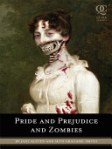
  • Historical Fantasy: This newer subgenre incorporates a fantasy twist on history or a retelling of historical classics, demonstrated well in Pride and Prejudice and Zombies. There are also similar subgenres, such as Prehistoric or Medieval Fantasies, which put fantasy elements into the respective time periods.
  • Erotic Fantasy: This category merges fantasy with erotica or erotic scenes. A particularly popular example of this, at the moment, is Fifty Shades of Grey—however the author herself describes it as Romantic Fantasy, not Erotic Fantasy. The lines get ever more blurry across the subgenres, as you can see…
  • Comic Fantasy: A blending of comedy and fantasy. Pieces in this style can also be parodies of other fantasy works.
  • Fairy Tale Fantasy: This is a folkloric style of fantasy involving classic fairy tales, sometimes in a retelling, such as Wicked. This is also closely related to Mythic Fiction, which incorporates myth, folklore, or fables.
  • Urban Fantasy: This is fantasy taking place in a modern or urban setting. Twilight, for example, takes fantastical creatures (vampires and werewolves) and places them in modern-day times. The Sookie Stackhouse series is another example. However, many Urban Fantasy pieces fall under the next two categories as well.
  • Dark Fantasy: Blending a little bit of horror with fantasy, this subgenre keeps the magical elements but merges them with a sense of looming terror. Dark fantasy can take on a gritty and violent side, or it can simply have a more ominous, tension-filled sensation embedded into the work. It’s often described as “gothic” fantasy.
  • Supernatural/Paranormal Fantasy: There seems to be a lot of debate over Paranormal versus Supernatural Fantasy. The term paranormal refers to things that defy scientific explanation—which, you guessed it, seems to describe just everything about fantasy—and yet this term is generally used to describe fantasy involving the more science-oriented end of the spectrum (i.e. ghosts, ESP, aliens) and is linked to fantasy that has a more spiritual or religious tone. Supernatural, on the other hand, refers to creatures not governed by the laws of nature (which would thus seem to account for werewolves, vampires, zombies, succubi, demons, fallen angels, etc.). Still, the term Paranormal Romance, for example, is a style of romance in which creatures like vampires and werewolves engage romantically in a modern world. Confused yet? Just to make it more complicated, Preternatural Fantasy is also thrown into the mix sometimes, which tends to be the description for subject matter outside of “natural.” Again, this leads right back to vampires, werewolves, and the like. This is why books in this category are commonly referred to simply as Urban, Dark, or the bigger, broader category title of Speculative Fiction, which encompasses elements of the fantasy, horror, and science fiction genres (as well as some others).
  • Contemporary Fantasy: Much like Urban Fantasy, Contemporary Fantasy creates magical or fantastical elements in a modern world. Harry Potter is an example of this subgenre.
  • Science Fantasy: This is a term applied to fantasy that has a strong blending with science fiction. Though The Hunger Games is also classified as Juvenile Fantasy, I would suggest it is a prime example of Science Fantasy. Other subgenres under this heading are Sword and Planet or Superhero fantasies.
  • Steampunk: This is a newer subgenre for fantasy taking place in an industrial era. Often times it is of the Victorian era, and it tends to have a gothic feel.
  • Juvenile/Young Adult Fantasy: Fantasy for children or young adults. These can encompass any of the other subgenres, but the writing is geared to a younger audience.

There are still several other subgenres of fantasy that I have not listed above that are specific to certain games, styles, audiences, and codes (Wuxia, Fantasy of Manners, Bangsian, etc.). The following links provide even more description of the varying subgenres, and I used both of them to help me concoct this list. Speculative Fiction Writer’s Toolkit contains some of those I didn’t describe in detail, while Worlds Without End, Sci-Fi, Fantasy, and Horror Subgenres has some very thorough descriptions of subgenres not only in fantasy, but in science fiction and horror, if you are interested. Be sure to check them out if you’d like more information!

The fantasy genre is constantly evolving, creating multiple niches for people to find, read, and cherish. Are you reading any of these specialized subgenres? I’d love to know more about what types of fantasy you’ve run across and are interested in, as well as about anyone reading in the lesser known subgenres. Please share your fantasy reading experiences in the comment section below, and thanks for contributing your interests!


On Christopher Pike, Young Adult Thriller Extraordinaire

Last week, I noticed a large book on my best friend’s coffee table: Remember Me, the trilogy. Despite the fact that she’d bought it several weeks earlier with me at her side, I still squealed when I saw it, quickly scooping it up and clutching it tenderly to my chest. “Oh…” I sighed. “Have I told you how much this book means to me? I love Christopher Pike.” She’d already heard this story at least three times, but since her mother was in town and sitting next to me on the couch, I continued gushing for five straight minutes about an author who happens to be my ultimate hero.

You see, long ago, I was a little girl with a taste for books that exceeded my love of ice cream (and that’s saying a lot). All I did was read, read, read, and in doing so, I rapidly outgrew the books in my age range. My friend Carrie had a similar problem, and one afternoon when we were ten, while my mom sang along to the car stereo and we talked quietly in the back seat, Carrie handed me a brand new paperback and leaned close to my ear.
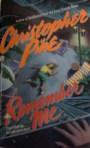
The cover that caught my eye—and started a long-running reading obsession.

“You can’t tell your mom,” she said. I grabbed the book, a brightly colored paperback with a dead girl on the cover and the most interesting, violent-looking font screaming the title and the author’s name across the cover.

Christopher Pike. Remember Me.

“I like his name. What’s it about?” I flipped the book over, scanning the blurb on the back before I gasped aloud. “Oh wow! This looks so neat!”

“He’s great,” Carrie said. “But I think it’s supposed to be for older kids. My mom didn’t want me to read it, so I bought it. I have more, too.”

I smiled, sticking the book in my bag so that I could start reading it as soon as I got home. Carrie had already introduced me to V.C. Andrews—an author whose work was most definitely NOT for kids—so I kept this little secret between us.

That is, until I decided Christopher Pike was the most genius writer I’d ever come across, and then I just had to tell my parents about the amazing plots he created. Thankfully, they knew I had a good sense of right, wrong, and reality, and since my mother had a love of scary movies, it all worked out pretty well. (I still kept the V.C. Andrews to myself.)

Within about six weeks, I’d read all six of Pike’s previously published books. I carried them with me everywhere, terrified by the thrill-ride on every page and yet delighted with the themes written upon them. Here was an author who wrote about teens in a mature, honest manner, but in an unusually addictive way. He never dumbed down the content; instead he let all his characters run wild in completely shocking plots. They lived on the edge—they drank, they smoked, they had sex (or they knew about other teens having sex, because their virginal naivety actually managed to be their fatal flaw). I rooted for every character, even the seriously bad ones: there were teens torturing their loved ones, teens who found monsters while drinking in the woods, teens who somehow found a mental link to ancient goddesses, teens who happened to be ancient creatures, and teens who had mythical origins and thus transformed into clawed predatory beasts! And of course, there were some plain old classically terrifying teens who just killed their classmates.

It really didn’t matter what they were doing—Pike wrote his teens from an adult point of view and let them do bad stuff, while still crafting a compelling and well-written story.

I was so enthralled with his concepts I kept right on reading, eagerly awaiting every next book’s release date. Some of them were so good, I read them twice in a row. Chain Letter (1986), Spellbound (1988), Scavenger Hunt (1989), Witch (1990), and my absolute favorite, Whisper of Death (1991) were some of the titles I wouldn’t stop talking about. Somehow, the man wrote three or four books a year (!), and I collected them like candy, enjoying the long row of paperbacks across my bookshelf; each of them had the same neon-colored binding and scratch-style font that had captured my heart, and I treasured my collection all through middle school and into the start of high school. I even wrote fan mail, telling Mr. Pike how superb I thought he was, and that I loved him. I might even have offered to marry him.

Whatever I said in those letters, I do remember what he made me feel: an excitement for reading, an unparalleled transfixion to every work, and most importantly, a passion for the art of writing and an inspiration to start writing on my own. Christopher Pike is, after all, the very reason I have a young adult horror manuscript tucked safely away in my fire safe box, awaiting the day I might decide to continue working on it.

In the 90s, Pike released some adult stories that I also read—Sati and Season of Passage, to name a couple—but his true voice really echoed with teenagers. He wrote a collection called Spooksville for a younger audience that I never read, but not surprisingly, the books in it were also a big hit. At some point I learned a little more about Mr. Pike, which is actually not that much: his real name is Kevin Christopher McFadden, and he is incredibly elusive and private about his life. Even while researching for this post, I didn’t find much else on him except for a plethora of fan bloggers—and there are tons of us, all inspired by a vast collection of incredible books we read in our impressionable youth.

As an adult, I get tingles whenever I pass the work of Christopher Pike at the bookstore. I run my fingers over the spines, hoping that today’s readers are enjoying them at least half as much as I did. No matter what your age, if you’ve never read a Christopher Pike book, I highly encourage you to do so. You can find a complete listing of his works here: Works by the Amazing Christopher Pike

I’ve reread a few pieces over the years, and have also kept up on the occasional adult novel he’s released—but now that my friend has Remember Me, I’m tempted to move my entire to-read stack aside and instead reread every book by the man who inspired me with his phenomenal thriller work.

That said, I think I’m going to pick up an old classic from Barnes and Noble this weekend. 🙂

Happy reading, everyone!


KYRESA Gets (One Last) Makeover…and a Conference!

Just a short posting today.

I’m happy to report that in addition to my five fabulous beta readers—you may remember them previously referred to as A, B, E, W, and Z—Kyresa has now also gained one more reader: a real live editor!

While visiting a friend a couple of weekends ago, I discovered that her family member did editing work and also had some publishing experience. We got to talking, and she offered to read my work in progress.

A few days later, she made some suggestions on a portion that I found not only helpful to Kyresa, but also to my writing in general. Some “fine tunings,” if you will. It took a mere two minutes for me to realize this was an excellent opportunity, and now “P” has been added to my roster of wonderful readers (the initials A, B, E, P, W, and Z are now really starting to cover the whole alphabet, from A to Z!). I’m very excited to work with her, as well as to implement the final touches on Kyresa before I start sending the book out to agents this summer.

In addition, I am thrilled to share that I just registered for my first writing conference! Though it is a few months away, the Cascade Writers Workshop will be a great opportunity—there I will meet and network with fellow fantasy authors, editors, and agents, as well as further hone my craft in several workshops. Needless to say, I am now eagerly anticipating the summer.

Alas, it is a long way off…in the meantime, I have a few other pieces I’m working on, and am also in the process of submitting some of my short stories to literary journals. I will continue to update my blog with writerly news as time goes on.

Stay tuned in the next few days; in my next posting I will share my undying adoration for a particular author of my youth…

🙂


Don’t Just Do…Live!

Since I was a little girl I’ve been a storyteller, a writer, and a dreamer, always planning to one day be an *author*—that very person you imagine when you whisper the two melodic syllables aloud…but it’s only been in the last few years that I’ve honed my focus, and in the last year that it’s become even more to me: my soul, my heart, my love, and my passion.

So a few weeks ago, just after my first post (“The Journey”), I had an inspiring phone conversation with my mother. We discussed my freshly tuned writing focus, and like a breathless girl admitting her crush I told her my plans—Kyresa, the other books, the blog, the short stories, the networking, all of it. My mother listened patiently, and after a few proud mom compliments she said, in a dreamily soft voice, “Honey, you have it figured out now! You are no longer just doing…you are finally living.” I nearly burst into tears with her sweet words of encouragement, because I realized my mom was right.

Follow your dreams, and live them.

For the first time in my life, I feel like the stars I’ve always reached for are possible. The dreams I’ve always had are right there, at my fingertips, and I will no longer just do; I will live. I have never been more motivated. I have never been so happy and so fulfilled. I truly feel like I have realized what my life means to me, and that I am going to make all of my dreams happen by living this passion. My passion. Tough day, illness, heartache, bills—none of it matters anymore. I have a goal, a dream, and a wish, and it is to live this one life as thoroughly as I can by letting my fingers run across this keyboard as excitedly and quickly as my imagination dreams it, and as rapidly as my heart beats through it.

I have found my peace through writing. You, dear reader—you may be there already, or you may be on the path to finally reaching everything that you dream as well. Whatever the case, I encourage you to follow your heart, to unburden your soul, and to find that true passion within yourself to not just do…but live.

To finally live your fantasy.


On Writing Detail…Or, Observations of a Coffee Shop

A writer does many things, but one of the most important acts of writing is detail, whether it be the detail in setting, dialogue, characters, or the action carrying the plot. Being able to observe thus becomes a handy writer’s skill, since the most random of observations can spark an idea, a character, or a scene that we tend to excitedly and passionately write down.

My colleague friend mentioned that she thought writers in coffee shops were intriguing—seeing as how they’re observing all the people and sounds—and the idea soon landed me in the cushiest of brown chairs at one of my local Starbucks. In honor of my friend’s comment, I thought I’d practice the art of observation today. Whether I gain a clever new character to add to a future story or simply convey the mysterious clientele of an overly populated coffee chain, then the experience feels like good practice, and one I recommend to anyone to improve observation of detail in the sights, sounds, and smells around us.

On the occasion I decide to play the writer-in-the-coffee-shop game, I usually pick this Starbucks. I prefer it for many reasons: the staff is friendly, the drinks are consistent, and—since I’m like most American women with any pulse at all—I appreciate that members of the city fire department often stop by…because they make me feel safe. (I swear.) <Cough.>

Back to the task at hand. To my left is a women of about fifty, her dark skin covered in freckles and a skinny beige textbook resting in her lap. She rubs her chin as she ponders her reading, steadily erasing in her notebook as she works on what appears to be a math assignment. (Since I’m a math teacher by day, I find this detail particularly amusing.) The woman scribbles on her notebook in neat little rows, each character written with perfect penmanship despite her numerous erase marks and her repeated interruptions to stroke her chin. Soon she switches to touching her abalone shell earrings before frowning, then meticulously erases again. I’m half-tempted to offer to help her with the problems, but she breaks her studies to answer her phone, speaking in a quiet, monotone voice. I wonder why she might be taking classes at this point in her life and assume she’s probably had a lot of life experience before embarking on further education. Perhaps she has a family at home with six kids, each of them dragging their feet as they made their way to adulthood, and now that they’ve finally moved out it’s her turn to go back to school. Or, maybe she needs to improve her skill set for a job, and her employer threatened to replace her with the younger, peppier staffer he just hired last week if she didn’t.

There are a variety of ideas that spring to mind as she peeks curiously in my direction, but I coyly glance to the counter so as not to stare.

A man donning grey weathered cargo pants with several chains dangling off the sides just got in line, his bottom half oddly contrasting the white collared, button-up shirt that he’s closed clear up to his neck. He wears a black embroidered baseball cap and talks to the baristas with a random high-pitched laugh. These sorts of conflicting details often make for the most intrigue in a character, and when he turns to face the rest of the cafe, he scans over us with uncomfortably pinched blue eyes. He folds his wallet and slips it back into his left pocket, the lines in his forehead forming a multitude of zigzagging rows, and then sneaks away to the bathroom where his female companion emerges. She brushes back her black cropped hair, then plays with the zipper on her white hooded sweatshirt and speaks to him as he closes the door. Her candy-colored lips move in a lazy speech and I hear, “I don’t think so,” among a few other inaudible sentences, to which the man casually shuts the door with a roll of those startling eyes. Once he exits they scoot out of the shop as quickly as they came in, sending a grumpy scowl at one another when they pass a man at a window table.

This man wears a multi-colored beanie and a pair of earphones that he tugs at with a smile, his posture behind his laptop more relaxed than that of most anyone in here. He taps his foot to his music against his bag, its contents strewn casually on the floor. So into his music, he barely notices the sounds of the coffee grinding and brewing, the gentle whirring sound of the milk as it’s steamed, the baristas talking about the fact that someone named Kim didn’t show up for her shift on time and how Alex is going to “fire her ass,” or the fact that the woman behind him just knocked the last of her coffee onto the floor, the liquid making a slow drip, drip, drip onto the dirty gray tile just behind him…

The man bops his head, adjusting his cap once, twice; he stops typing to read what’s in front of him on the screen. His green-grey eyes scan the view, then he types again, reads, and types before glancing at me. We smile at one another, then go back to our respective computers. Perhaps he’s a professional working on a presentation, or a teacher typing his lesson plan, or a student working on a paper—or perhaps he’s a writer just like me, observing everything around him, jotting it down, committing it to memory, and playing with these details as the basis for a character for the next piece, while a little nondescript folk rock plays through the speakers overhead.

One can never tell if the characters observed are something to write from, but the process of digesting all these details is always a good practice for any writer, novelist, poet, or journalist alike.

For the moment, I might offer to help the woman next to me as I take the last few sips of my tea….

…but it looks like the fire truck just pulled into the parking lot.


Thoughts on THE HUNGER GAMES Movie

***Though I have tried to leave this review vague enough for those of you who have not yet seen the movie (or read the book), I am issuing a slight spoiler alert as I have made some obvious references to scenes from the story.***

It’s taken me a couple days to fully process my thoughts on The Hunger Games movie. If you’ve been reading along or following me on Twitter, you’ve likely noticed that I’ve been off the charts with enthusiasm for this movie. On Friday, I spent some time asking early viewers what they thought, and all of them seemed to be quite pleased.

So, when I headed out Friday evening with seven other friends to see it—five who had already read the books and two who had not—I had high expectations and a ton of anticipation for a movie I’d been waiting to see for over six months. Though I can say that we enjoyed the movie to a degree, we also all seemed to leave with the same sentiments, which were voiced very clearly by my close friend:

“Some things are just best left untouched.”

Perhaps my group of friends is the exception to the norm on this whole Hunger Games movie, but I had a hard time fully embracing it. There are things I definitely enjoyed: the acting, for example, was superb. Jennifer Lawrence made an excellent Katniss Everdeeen, Josh Hutcherson played a worthy Peeta Mellark, and Liam Hemsworth made a workable Gale Hawthorne (though he seemed far too old to be playing the character, in my opinion). Donald Sutherland, Stanley Tucci, and Wes Bentley as President Snow, Caesar Flickerman, and Seneca Crane, respectively, were by far the most impressive, easily filling the shoes of the manipulative Capitol characters they played. Elizabeth Banks provided a serious yet comic relief character through Effie Trinket, which seemed to closely fit the Effie we knew in the books. Lenny Kravitz as Cinna was also good, and his portrayal as Katniss’s supportive friend came across as heartfelt and representative of the original character.

The depictions of the Capitol and the Districts also felt clever and suitable. The director, Gary Ross, created a land of excess and technological wizardry for the Capitol, surrounding it with images of extraordinarily poor neighborhoods whose hunger, misery, and complete devastation has clearly prevailed after a hostile government’s suppression.

Despite all this great acting and staging, however, I really felt like I was watching a slow-paced, bare bones interpretation of a truly phenomenal tale.

I know, I know—no movie is ever as good as the book, but I think there were a lot of directorial choices by Gary Ross that could have gone differently in order to more closely suit the story. Character development was of course hindered by the length of the movie, but certain pivotal pieces were also purposely left out, such as Katniss’s guilt over leaving Gale behind, and several momentous details about rival characters through the later parts of the movie. I recognize that some of this happened due to a PG-13 rating—a wise move in that the book is for teens, so of course the audience would mostly be filled with teens as well—but some of it seemed unnecessary. Yes, the story was there, but the devastation and torment caused by a Capitol so horrifically murdering children as payback for rebellion seemed cryptically and skeletally pieced together with scenes of a Capitol that we didn’t completely understand as viewers. Had I not read the book, I don’t know that I would have understood what—to me—is the entire essence of The Hunger Games: Katniss’s strength despite the nerves, horror, and fear she feels as she makes her way through the Games and preparation for them. We see only a glimpse of her feelings in the movie, as we rapidly speed through her multitude of obstacles and her eventual care for Peeta. In addition, the “Girl on Fire” chariot scene felt like someone ran through with an extinguisher to tone down the blaze before it came to our screen, but this part was critical for the entire idea of Katniss as a spark for revolution. To me, the whole film felt rushed and yet barren, as if we were meant to wade quickly through a series of images that could have been dramatic and terrifying, but really were just dulled-down glimpses of a society that was supposed to evoke some emotion from us as an audience.

The part I did feel actually drew something out of me was one between Katniss and Rue, played by Amandla Stenberg. Rue’s demise did play out a tad differently in the movie to suit the time frame, but I appreciated Ross’s portrayal of their connection and teared up a bit as I watched.

In the end, I admit I may have been expecting too much. I will of course see the next movie because I have some buy-in with the trilogy, but even the ending did not have enough bite for me, nor did it leave me wanting more—or even realizing there was more, for that matter. Was Snow mad? Did he give up? Was that a shrug of his shoulders and a general dismissal of Katniss? I really had no idea other than what I read, and for the audience member who did not read the book, I don’t know that I’d return for part two.

Am I glad I saw the movie? Yes. Was I disappointed? Yes. Could it have been done in a different way that would have suited my vision? Very possibly. Am I in the minority of viewers?I’m not sure, but I have a strong feeling that I am.

But, more importantly, do I still have half of the third book, Mockingjay, to finish, to reinspire me to fall in love with the trilogy? YES! And for that I’m very grateful.

I know my opinion is likely conflicting for many, but I’d love to know your thoughts. If you’re willing to share, please participate in the poll below.

Thanks for sharing!